
Home / Accelerate Time-to-Science using the NVIDIA Grace-Hopper Superchip
[SCA/HPCAsia 2026 Tutorial]
Accelerate Time-to-Science using the NVIDIA Grace-Hopper Superchip
Abstract
Arm technology has become a compelling choice for HPC due to its promise of efficiency, density, scalability, and broad software ecosystem support. Arm expansion in the datacenter started in 2018 with Arm Neoverse, a set of infrastructure CPU IPs designed for high-end computing. The Arm-based Fugaku supercomputer, first of its kind implementing Arm SVE instruction set, entered the Top 500 in June 2020 scoring at the top and retaining a leadership position over the years not only in HPL but also for HPCG. There is a growing interest in diversifying and exploring new computing architectures to re-create a vibrant and diverse ecosystem as it was more than a decade ago. Arm technology is at the forefront of this wave of change.
To further advance datacenter and accelerated computing solutions, NVIDIA has built the Grace Hopper Superchip which brings together the groundbreaking performance of the NVIDIA Hopper GPU with the versatility of the NVIDIA Grace CPU, tightly connected with a high bandwidth and memory coherent Chip-2-Chip (C2C) interconnect. The NVIDIA Grace CPU packs 72 high performance Armv9 cores on a single die to realize competitive FP64 TFlops of computing performance and up to 500GB/s of memory bandwidth at industry-leading power efficiency.
In this tutorial, our experts will answer any questions you may have about fully unlocking the scientific computing potential of the Grace CPU and Grace Hopper GH200 Superchip. The speakers will guide the attendees through compile, execute, profile and optimize HPC and AI workloads for Arm to demystify those claims that changing CPU architecture is hard. At the same time it will introduce how to leverage the GH200 unique architecture using multiple programming models thanks to practical examples attendees can replicate. Remote access to NVIDIA GH200 resources will be provided.
Venue
- Venue
- Osaka International Convention Center, Osaka, Japan (In conjunction with SCA/HPCAsia 2026)
- Date
- Thursday, January 29, 2026
- Room
- TBD
Program (Tentative)
| Time | Session Title | Lecturer |
| 13:30 - 13:45 | Introduction of Miyabi-G | Prof. Kengo Nakajima (The University of Toyko) |
| 13:45 - 15:00 | Introduction of GH200 Hardware and Software + Hands-on | by NVIDIA Speaker |
| 15:00 - 15:30 (Tentative) | Break | |
| 15:30 - 16:30 | Profiling LLM Training on GH200 using NVIDIA Nsight Systems | by NVIDIA Speaker |
| 16:30 - 17:30 | AI for Science: Solving PDE using PyTorch on GH200 | by NVIDIA Speaker |
| 17:30 - | "Bring your own code" Session | by NVIDIA Speaker |
|
||
Tutorial Format
The tutorial will include both lectures and hands-on sessions. SSH access to the GH200 environment will be provided. Participants must bring their own laptops.
Remote Access to Miyabi
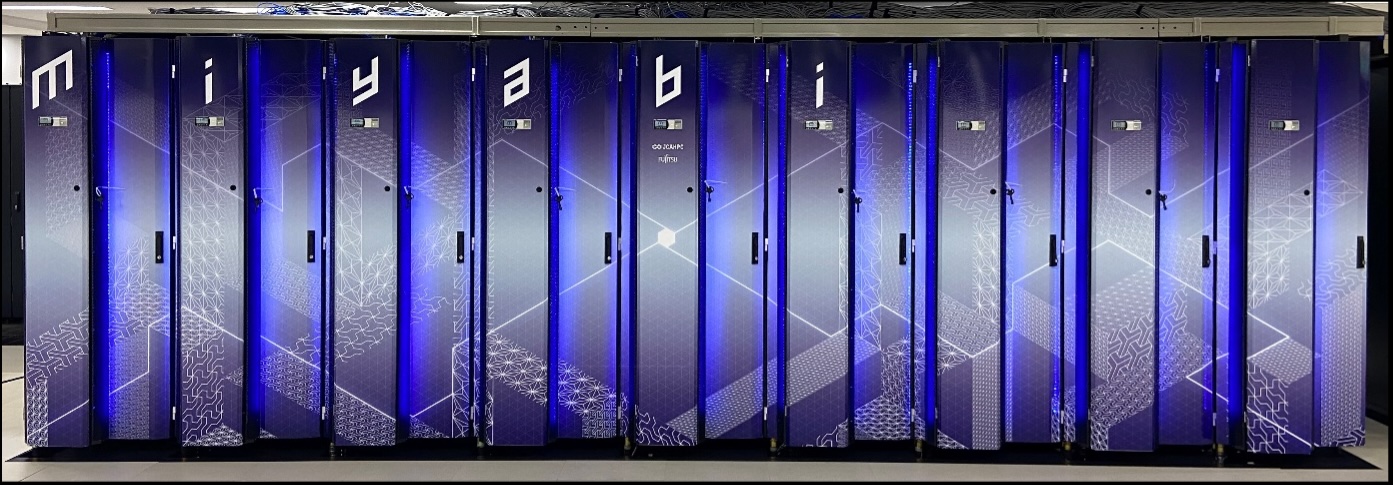
For this tutorial, we will provide educational access to the "Miyabi" supercomputer, equipped with the NVIDIA GH200 Superchip and operated by the Joint Center for Advanced High Performance Computing (JCAHPC). User accounts will be issued by the Information Technology Center at the University of Tokyo. Both Japanese residents and non-residents may apply. Non-resident registrations will be reviewed for export control and security purposes, and remote access to Miyabi may be denied. Conference registration fees are non-refundable even in such cases.
- Participants must comply with the requirements for International Educational Use, including the Terms of Use and related guidelines
Participants must bring their own laptops. We do not require a specific operating system; Windows, macOS, or Linux are all acceptable. Please ensure your environment is ready to use for this tutorial before the tutorial.
- Able to connect to the conference Wi-Fi or use your own mobile internet connection
- Ensure SSH client is installed and external SSH access is possible
- OTP software (such as Google Authenticator or Microsoft Authenticator) is installed on your laptop or smartphone
- Your computer is updated with the latest security patches from Windows Update, Apple Security Update or etc.
- Anti-virus software is installed, and a full scan has been completed to confirm the system is free of malicious software before the tutorial
Without these security measures, we will refuse remote access to Miyabi.
For those who already have an account on Miyabi-G
We provide educational user accounts on Miyabi-G for this tutorial. Because this tutorial has limited time, we will provide a special high-priority job queue. To access this queue, we recommend completing the account creation process even if you already have a Miyabi-G account. We will provide limited technical support for accounts other than those for this tutorial.
Registration
Because this tutorial is part of the SCA/HPCAsia 2026 Conference, all participants must register for the conference. The Conference Pass and Student Pass include tutorials. In addition to conference registration, separate registration for this tutorial is required to obtain remote access to Miyabi.
- Registration Deadline
- December 21th 2025 (AOE, Firm Deadline)
- Maximum Participants
-
50 (on a first-come, first-served basis)
We will confirm by email when your application is accepted and when your access to Miyabi is granted.
- Registration Form
- https://forms.gle/5H169bneuC1dFUNv9
Tutorial Organizers
- Filippo Spiga, NVIDIA Corporation
- Gabriel Noaje, NVIDIA Corporation
- Naruhiko Tan, NVIDIA Corporation
- Shinnosuke Furuya, NVIDIA Corporation
- Miwako Tsuji, University of Tsukuba / RIKEN
- Norihisa Fujita, University of Tsukuba
- Takashi Shimokawabe, The University of Toyko
Contact
sca-hpcasia2026-gh200-tutorial [at] ccs.tsukuba.ac.jp